
Template
Black and White Photo Generator
Upload an image to start your template-based generation.
Upload Image
Black and White Photo Generator
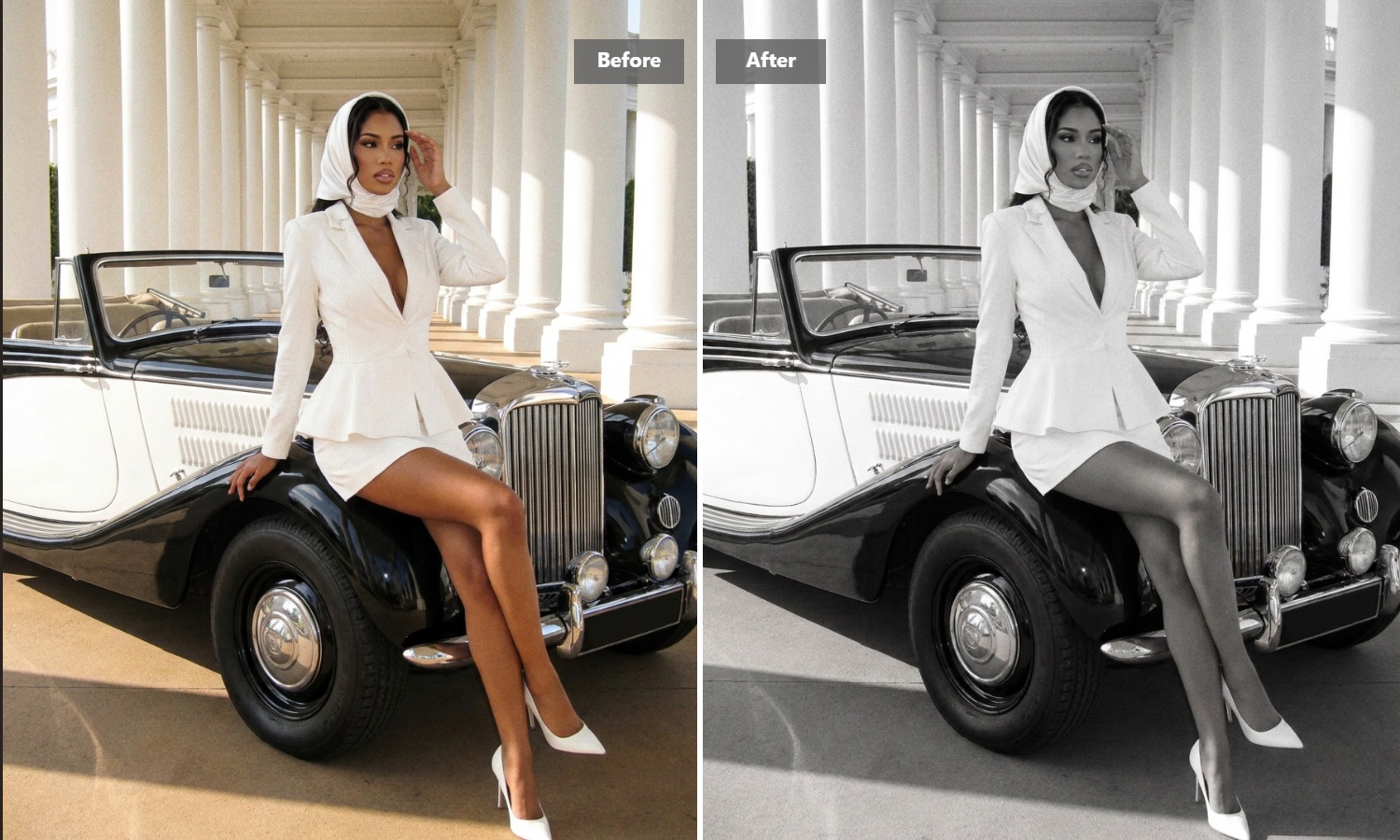
Turn Any Photo Into a Striking Black-and-White Image
See your photo from a completely different perspective. Guma transforms color images into expressive black-and-white visuals with richer tonal depth and a confident photographic mood. From portraits to everyday snapshots, upload your image and discover what stands out when color steps away.
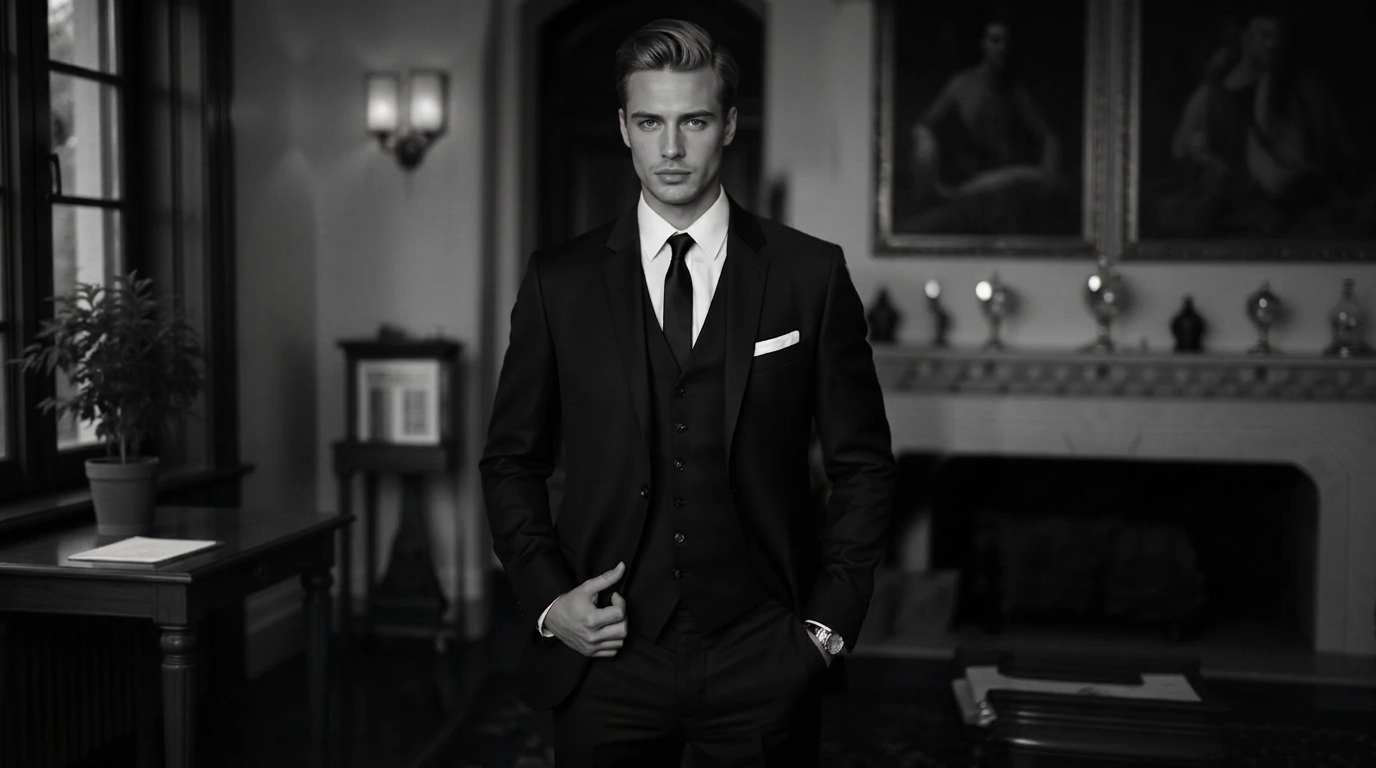
Give Portraits More Emotional Weight
A black-and-white portrait can make a glance, smile, or serious expression feel noticeably more direct. With fewer colors competing for attention, facial character and subtle details become easier to read. Try it with selfies, close-ups, couple photos, or portraits that already have a strong sense of personality.
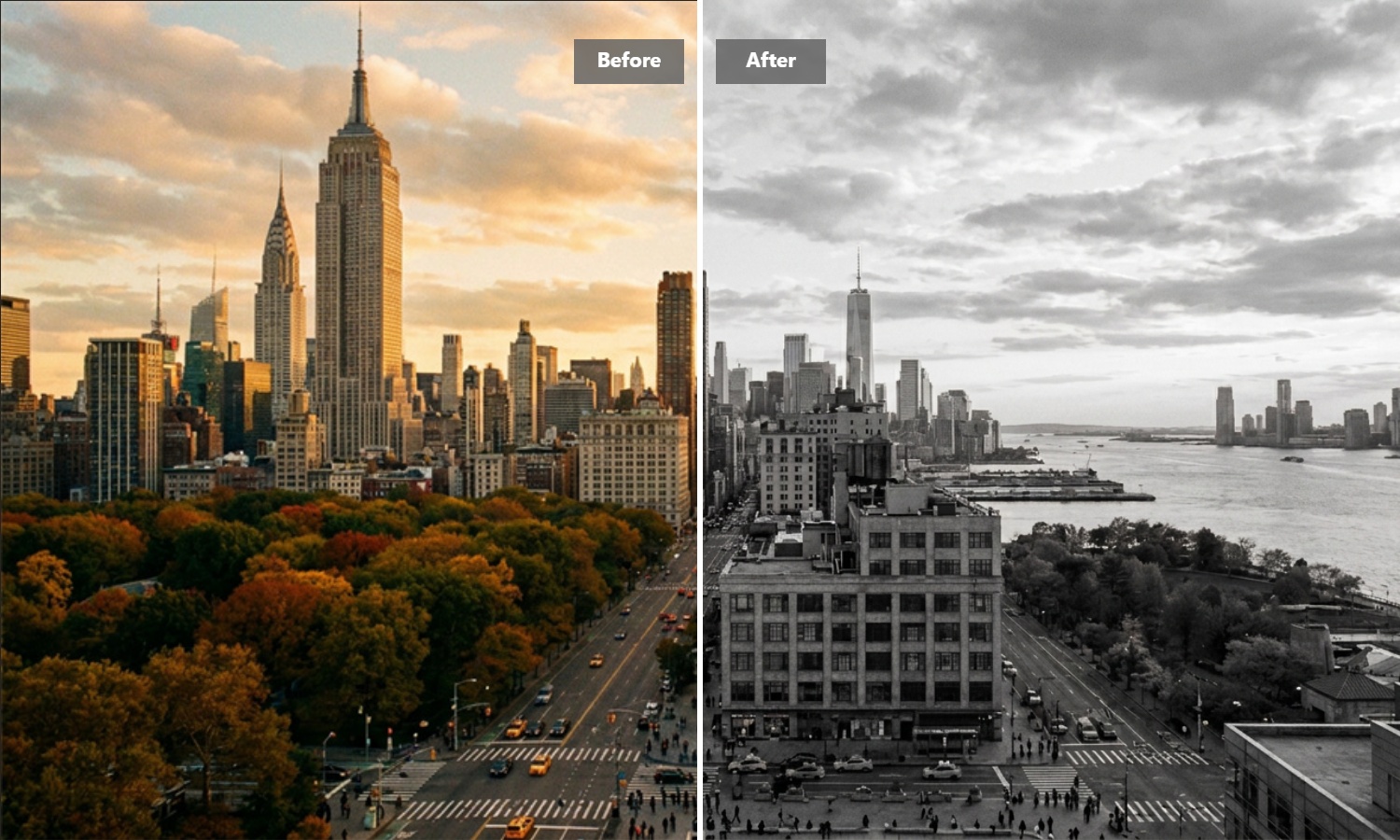
Bring a Graphic Edge to Streets and Architecture
City scenes take on a different energy without color. Building lines feel sharper, reflections become more noticeable, and ordinary streets can gain a documentary quality. It is an especially interesting look for architecture, travel shots, urban photography, and images built around strong shapes or repeating patterns.
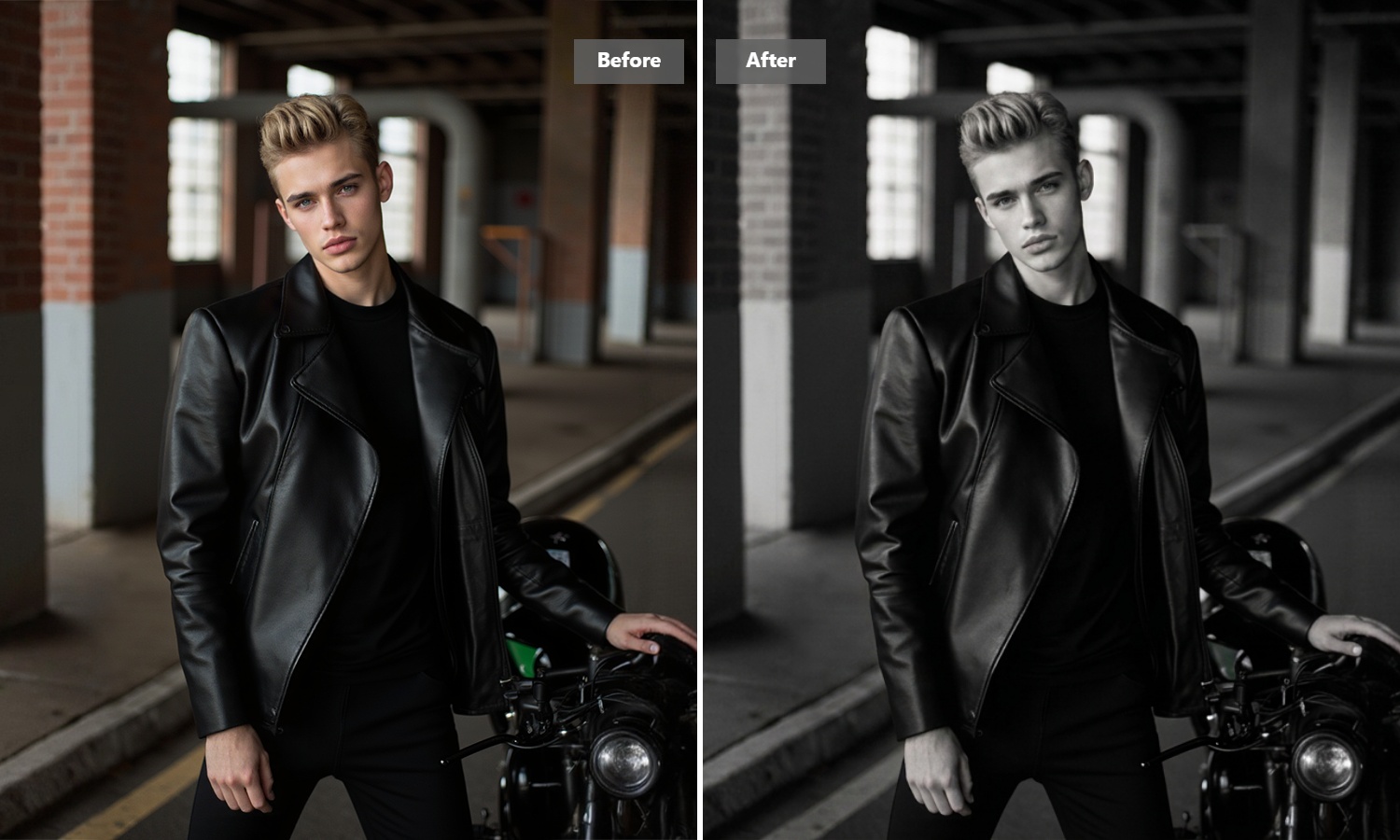
Create a Cleaner Look for Profiles and Social Posts
When a colorful background feels distracting, black and white can make the whole image feel more intentional. Profile pictures, creator portraits, campaign visuals, and social posts gain a simpler visual language that works well beside typography, layouts, and other content without fighting for attention.
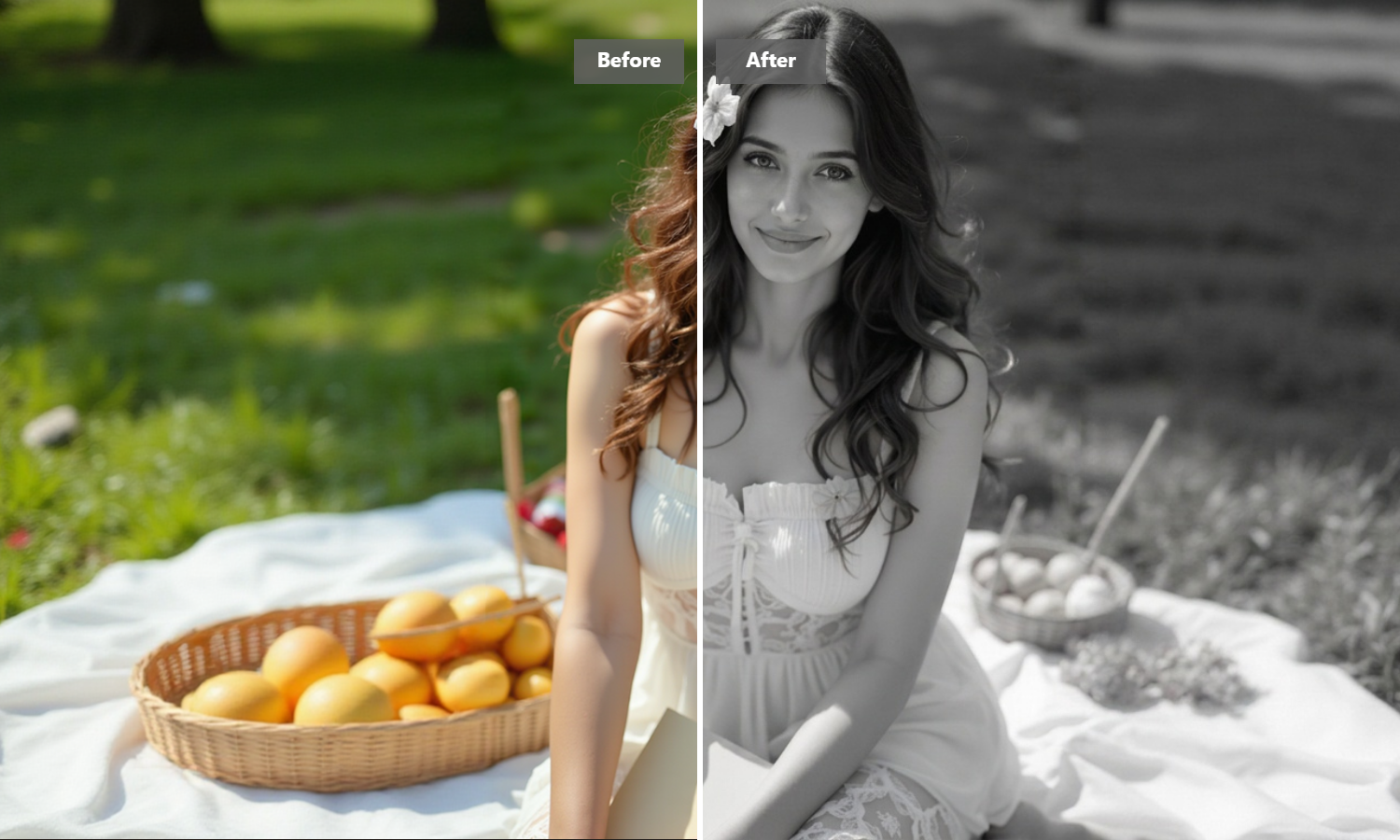
Turn Everyday Moments Into Images Worth Revisiting
A casual travel shot, wedding moment, family photo, or candid portrait can feel surprisingly different in monochrome. Familiar scenes gain a photographic character that is less about reproducing reality exactly and more about preserving the mood of the moment.
How to Generate Black and White Photos with Guma AI
Upload Your Photo
Choose the color photo you want to transform and add it from your device.
Generate Your Image
Start creating and see your original photo reimagined in black and white.
Download Your Result
Review the finished image, save the version you like, and use it wherever it fits your project.
Discover More AI Photo Styles
FAQ
What is a black-and-white photo generator?
A black-and-white photo generator transforms a color image into a monochrome version where tone, shape, texture, and subject detail take priority over color. It works especially well for portraits, selfies, street scenes, and images where expression or composition matters more than color. For more ways to create distinctive portrait looks, explore our AI Portrait Generator.
How do I turn a color photo into black and white?
Upload the color image you want to use and start the generation. Once processing is complete, you can review the black-and-white result and download it. Starting with a clear image generally makes it easier to retain recognizable subjects and important visual details.
What is the difference between black and white and grayscale?
Grayscale technically describes an image made from different shades of gray between pure black and white. “Black and white” is often used more broadly in photography to describe the overall visual style of a monochrome image, including its tonal character and photographic mood.
Will the black-and-white version look exactly like my original photo?
Not necessarily. The result is based on your source image, but the final interpretation can vary depending on its subject, framing, lighting, background, and level of detail. Treat the generated image as a new visual version of the original rather than expecting a pixel-for-pixel color removal.
Is the black-and-white photo generator free to try?
Guma offers daily free credits upon registration, enabling you to try AI image generation without making any upfront payment. Higher generation limits and access to additional creative options are available through paid subscription plans.
Why do photographers use black and white instead of color?
Color is not always the most important part of an image. Removing it can shift attention toward composition, shape, expression, texture, and the relationship between different tones. That is why monochrome photography remains common in portraiture, documentary work, architecture, fashion, and fine-art photography.